New Hope: Immunotherapy for Prostate Cancer with Dendritic Cell Therapy
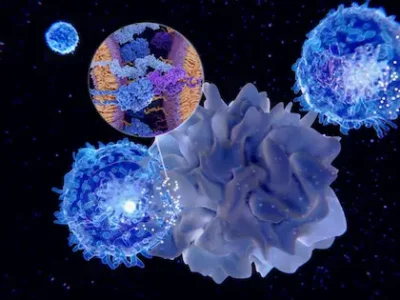
We organize your treatment with prostate cancer with dendritic cell therapy in Germany
Today, prostate cancer with dendritic cell therapy is a leading choice for those seeking to prolong life and maintain a high quality of life while actively managing their diagnosis.
Treating prostate cancer with dendritic cell therapy offers a specialized approach that goes beyond traditional surgery or radiation. This modern immunotherapy works by training your own immune system to act as a precision-guided defense force. Unlike treatments that attack all fast-growing cells, this personalized vaccine in combination with oncolytic virus-therapy is designed to recognize and target specific markers found only on your tumor.
The discovery of dendritic cells dates back to 1973 by Dr. Ralph Steinman, a breakthrough that eventually earned him the Nobel Prize. These cells are the “sentinels” of the immune system, responsible for signaling T-cells to attack invaders.
For patients, this means the body learns to fight the disease naturally from within. Because the treatment uses your own biological material, it is remarkably gentle, often causing only mild, flu-like symptoms.
Would you like me to find a clinic in Germany that specializes in this treatment?
Traditional vs. Modern Treatment of Prostate Cancer in Germany
Understanding Traditional Treatments for Prostate Cancer
When someone is diagnosed with prostate cancer, the first treatment options that come to mind are often the traditional ones—surgery, radiation therapy, and hormone therapy.
Surgery, known as prostatectomy, involves removing the prostate gland and sometimes nearby tissues to stop the cancer from spreading. Radiation therapy uses powerful beams to kill cancer cells, and it’s often chosen when surgery isn’t suitable. Hormone therapy, on the other hand, works by lowering testosterone levels, which helps slow down cancer growth since prostate cancer cells depend on this hormone.
These traditional methods have saved many lives and remain important today. However, they can come with side effects such as fatigue, urinary problems, and sexual dysfunction. For many patients, the recovery process can be long and emotionally challenging, even though the goal is always to achieve remission or long-term control.
A New Era: Modern Immunotherapy for prostate cancer in Germany
Today, cancer care in Germany is entering an exciting new phase with treatments like dendritic cell therapy for prostate cancer and other immunotherapies. Unlike traditional methods that directly target the tumor, these modern approaches focus on strengthening the body’s immune system so it can recognize and destroy cancer cells naturally.
Hence, Dendritic cell therapy, for instance, uses a patient’s own immune cells, which are trained in the lab to detect cancer and then reintroduced into the body. Furthermore, Germany is known for its advanced cancer clinics that combine these innovative therapies with personalized treatment plans.
Therefore, patients often report feeling more hopeful because these treatments aim to restore the body’s balance rather than just fight the disease aggressively. Additionally, immunotherapies tend to have fewer long-term side effects compared to chemotherapy or radiation.
Overall, while traditional treatments remain essential, the rise of immunotherapy in Germany offers a gentler, more targeted path toward healing and long-term well-being. Hence, in Germany dendritic cell therapy is part of vaccine strategies for prostate cancer.
Dendritic Cell Vaccination for Prostate Cancer in Germany
Prostate cancer treatment with dendritic cells is a new and promising approach that helps the body fight cancer naturally. Dendritic cells are special immune cells trained to find and attack cancer cells. In this therapy, doctors collect the patient’s immune cells, activate them in the lab, and then return them to the body.
These cells then alert the immune system to target and destroy prostate cancer cells. However, this modern treatment is gentle, personalized, and has fewer side effects compared to traditional methods like chemotherapy and other immunotherapies. Hence, it offers new hope for men looking for advanced and natural cancer care options.
Why does immunotherapies show modest effects in prostate cancer?
Prostate cancer is often “immunologically cold”. This means prostate tumors usually have few immune cells (like T-cells) inside them.
Cancers with lots of immune cells (“hot” tumors) respond better to immunotherapy because there are already immune soldiers present to activate. Prostate cancer doesn’t give the immune system much to work with.
Low mutational burden: Prostate cancer cells typically have fewer DNA mutations than cancers like melanoma. Fewer mutations mean fewer “neoantigens” (abnormal proteins) for the immune system to recognize as foreign. Without strong targets, the immune response remains weak.
Immunosuppressive microenvironment: The prostate tumor releases signals and recruits cells (like regulatory T-cells and myeloid-derived suppressor cells) that block immune activation. This suppressive environment keeps the immune system from attacking effectively.
Slow-growing nature: Prostate cancer tends to grow slowly, which can make it less visible to the immune system. Fast-growing tumors produce more inflammation and attract more immune activity — slow ones don’t.
Types of Immunotherapies Used in Treatment of Prostate Cancer
Immune Checkpoint Inhibitors
Drugs like pembrolizumab (Keytruda) or nivolumab (Opdivo) block PD-1/PD-L1 or CTLA-4 pathways — “off switches” on immune cells Only effective in a small subset of patients whose tumors have MSI-H, dMMR, or TMB-H mutations.
Cancer Vaccines (Experimental)
Several vaccine trials (e.g., PROSTVAC, GVAX) try to stimulate an immune attack using prostate-specific antigens like PSA or PSMA. Results so far have been safe but modest in benefit.
Dendritic Cell Therapy (Personalized)
Advanced clinics, especially in Germany, are exploring custom dendritic cell therapies, where immune cells are trained in the lab to recognize a patient’s own tumor antigens.
Early studies suggest it can activate the immune system better with fewer side effects, but large-scale trials are still ongoing.
Does dendritic cell therapy work for prostate cancer?
Dendritic cell (DC) therapy for prostate cancer is a form of personalized immunotherapy that trains the patient’s own immune system to recognize and attack prostate cancer cells. Here’s how it works, step-by-step, in clear and practical terms:
1. What dendritic cells are
Dendritic cells are a type of immune cell whose job is to present antigens (molecular “ID tags”) to T-cells. Think of them as immune teachers that show T-cells what to attack.
2. Collecting the patient’s immune cells
The process starts with leukapheresis, where white blood cells—including precursor cells that can become dendritic cells—are taken from the patient’s blood.
3. Creating dendritic cells in the lab
The collected precursor cells are cultured in the lab and stimulated to become mature dendritic cells.
4. “Loading” the dendritic cells with prostate cancer antigens
These dendritic cells are then exposed to tumor-associated antigens.
This “loading” teaches dendritic cells what the cancer looks like.
5. Reinfusion into the patient
The “trained” dendritic cells are infused back into the patient, usually in multiple sessions.
6. Activation of T-cells
After infusion, the dendritic cells travel to lymph nodes and:
Present prostate cancer antigens to T-cells. Activate cytotoxic T-cells and trigger an immune response aimed at recognizing and killing prostate cancer cells throughout the body.
7. What the patient may experience
Dendritic cell therapy tends to be:
Well-tolerated and associated mostly with mild side effects (fever, chills, fatigue). Used in advanced or metastatic prostate cancer, typically after hormone therapy stops working
Is dendritic cell therapy effective for prostate cancer?
1.) Understanding How Well Dendritic Cell Therapy Works
Treating Prostate Cancer with Dendritic cell therapy (DCT) can be effective for some men with prostate cancer, but its results are usually modest when used alone.
Its main strength is that it activates the patient’s own immune system to recognize and fight cancer cells, something prostate tumors are normally quite good at hiding from.
Even though it does not always shrink tumors or lower PSA levels, the therapy still improves how long some patients live. This happens because the “trained” dendritic cells stimulate T-cells to attack cancer cells throughout the body in a more targeted and sustained way.
Additionally, experimental versions of DC therapy often look stronger when they include more powerful antigens—such as personalized neoantigens—or when the dendritic cells are matured in ways that make them more stimulating to T-cells. These developments may help overcome the natural weakness of prostate cancer as an immunogenic target, which means the cancer doesn’t provoke a strong immune response on its own.
Though results vary from person to person, DC therapy remains an attractive option because it has very low toxicity, making it easier to tolerate than many standard treatments.
2.) Why Combination Approaches Improve Effectiveness
Researchers have discovered that DC therapy becomes much more effective when it’s paired with other treatments that boost the immune system or weaken the cancer’s defenses. For example, prostate tumors often create an immune-suppressive environment that makes it hard for T-cells to work.
Combination therapies help disrupt this environment and allow dendritic-cell–activated T-cells to do a better job.
Moreover, combining dendritic cell therapy with Newcastle disease virus (NDV)—a type of oncolytic virus—has shown promising potential in early research and clinical experience. NDV naturally infects and kills cancer cells while leaving healthy cells untouched. As the virus destroys tumor cells, it releases many tumor antigens, giving dendritic cells even more material to “teach” the immune system.
This effect can make the immune response stronger and more visible to T-cells. Some clinics and research groups report improved immune activation and, in certain cases, slower disease progression when DC therapy and NDV are used together.
3.) Hyperthermia and Multi-Step Immunotherapy Examples
Hyperthermia—controlled heating of the tumor region—can also enhance the effect of dendritic cell therapy. By warming tumor tissue, blood flow increases and cancer cells become more stressed. This stress causes the cancer cells to release heat-shock proteins and antigens, which dendritic cells can capture more easily.
When combined with DC vaccines, hyperthermia may lead to stronger T-cell responses and improved immune recognition. Some integrative cancer centers have reported examples where patients receiving DC therapy along with local or whole-body hyperthermia experience better immune activation and, in some cases, more stable disease over time.
What is the Abscopal Immune Effect Using Immunotherapy for Prostate Cancer?
The abscopal immune effect is a rare but powerful phenomenon where treating a tumor in one area of the body triggers the immune system to attack tumors in other, untreated areas. The word abscopal literally means “away from the target.”
Below is a clear, user-friendly explanation—what it is, how it works, and why combined immunotherapy makes it more likely to happen.
What Is the Abscopal Immune Effect?
Normally, radiation therapy or tumor ablation kills cancer cells only in the exact area being treated.
But sometimes, after local treatment, cancers far away from the treatment site also shrink or disappear. This unexpected whole-body response is called the abscopal effect.
- It’s not the treatment itself that spreads
- It’s the immune system becoming activated in a powerful, systemic way.
- How Immunotherapy Makes the Abscopal Effect More Likely
- Immunotherapy (especially checkpoint inhibitors like PD-1/PD-L1 or CTLA-4 blockers) dramatically increases the chance of an abscopal effect.
Here’s what happens step-by-step:
1. Local tumor treatment causes cancer cells to die. This could be from:
- radiation
- ablation (IRE, cryoablation, HIFU, RFA)
- oncolytic viruses
- electro-chemotherapy
- hyperthermia
When cancer cells die, they spill neoantigens—unique proteins found on the tumor.
2. These antigens alert the immune system
Dendritic cells collect the antigens like “crime-scene evidence” and carry them to lymph nodes.
3. Immunotherapy removes the immune system’s brakes
Checkpoint inhibitors “release the brakes” on T-cells, allowing them to:
- activate more strongly
- multiply rapidly
- stay active longer
This turns local tumor damage into a whole-body immune alarm signal.
4. Activated T-cells circulate and attack tumors anywhere
Because they now recognize cancer antigens, these T-cells can:
- travel through the bloodstream
- find metastatic tumors
- attack and kill them
This is the abscopal effect in action.
Why the Abscopal Effect Matters
Cancer often spreads in ways that surgeries or localized therapies cannot reach.
But if the immune system becomes systemically activated, it can hunt cancer cells throughout the entire body.
The abscopal effect is important because it shows:
- The body can mount a whole-body immune attack
- Treatments can be designed to trigger it more reliably
- Combination therapies are often much more effective
- Situations Where the Abscopal Effect Is Observed
Although still uncommon, it has been reported in:
- melanoma
- prostate cancer
- lung cancer
- breast cancer
- lymphoma
- renal cell carcinoma
- liver cancer
It almost always happens when local tumor destruction is combined with systemic immunotherapy.
Treatments That Help Trigger the Abscopal Effect
Leading oncologists in Germany often combine:
✔ Radiation therapy + immunotherapy
Most famous combination.
✔ Tumor ablation (IRE / ECT) + immunotherapy for prostate cancer
Ablation releases a large amount of tumor antigens at once.
✔ Oncolytic viruses (e.g., Newcastle disease virus) + immune therapies
Viral infection of tumors boosts antigen release and immune signaling.
✔ Hyperthermia + immunotherapy for prostate cancer
Heat stress increases antigen exposure and immune activation.
✔ IRT or ECT local tumor-destroying technique + Oncolytic virus therapy (New Castle Virus Dendritic cell vaccines
This combination is powerful because DCs can “teach” the immune system using the antigens released.
Conclusion:
The abscopal immune effect is when treating one tumor triggers the immune system to attack others throughout the body. Hence the Immunotherapy for prostate cancer makes this possible by:
- Revealing tumor antigens
- Activating dendritic cells
- Unleashing T-cells
- Allowing the immune system to attack cancer systemically
- It represents one of the most exciting frontiers in cancer treatment—turning local therapy into whole-body immunity.
How much does combined immunotherapy for prostate cancer with dendritic cell therapy cost?
Cost vary and depends at the program you will receive at the clinic for immunotherapy for prostate cancer. However, a combination of oncolytic virus-therapy with Newcastle virus and 2-4 times dendritic cell vaccination starts at 65.000 Euro and go up to 175.000 Euro.
Therefore, we recommend to send us your medical files and current blood work in order to see which program would be suitable for you.

Find the best clinic for the treatment of Prostate Cancer with Dendritic Cell Therapy in Germany
Germany is a leader in medical innovation, particularly in the field of immunotherapy for prostate cancer. Patients seeking Treatment of Prostate Cancer with Dendritic Cell Therapy in Germany can find the best clinics and medical professionals, supported by the comprehensive medical concierge services of Surgical Experts.
Our organization helps patients navigate the complexities of receiving treatment abroad, ensuring they have access to top-tier medical care and the best possible outcomes.
Surgical Experts stands out for its commitment to patient care, offering services such as:
- Expert Medical Consultation: Personalized assessments to identify the most suitable treatment options.
- Coordination with Leading Immunotherapy Clinics: Connections with top clinics that specialize in dendritic cell vaccines for cancer.
- Comprehensive Travel Support: Assistance with travel logistics, including flights, visas, and accommodation.
- Dedicated Patient Support: Continuous guidance and support throughout the treatment journey.
Choosing Surgical Experts ensures that patients benefit from the latest advancements in immunotherapy for prostate cancer in combination with dendritic cell vaccination while receiving world-class care in Germany’s premier medical facilities.